This past Friday, New Braunfels and the surrounding Hill Country were hit with an intense burst of heavy winds. While short-lived, these powerful gusts acted as an immediate stress test for the urban canopy, exposing hidden weaknesses in trees across Comal County and leaving a trail of snapped limbs, crushed fences, and emergency removals in their wake.
When severe weather strikes, the aftermath highlights exactly why preventative tree trimming and hazard assessments are so critical. Over the weekend, our crews were deployed across town managing storm damage tree removal. Here is a look at what we saw on the ground, the hidden dangers the wind exposed, and what homeowners need to know before the next storm rolls in.
The Hidden Danger: Internal Decay
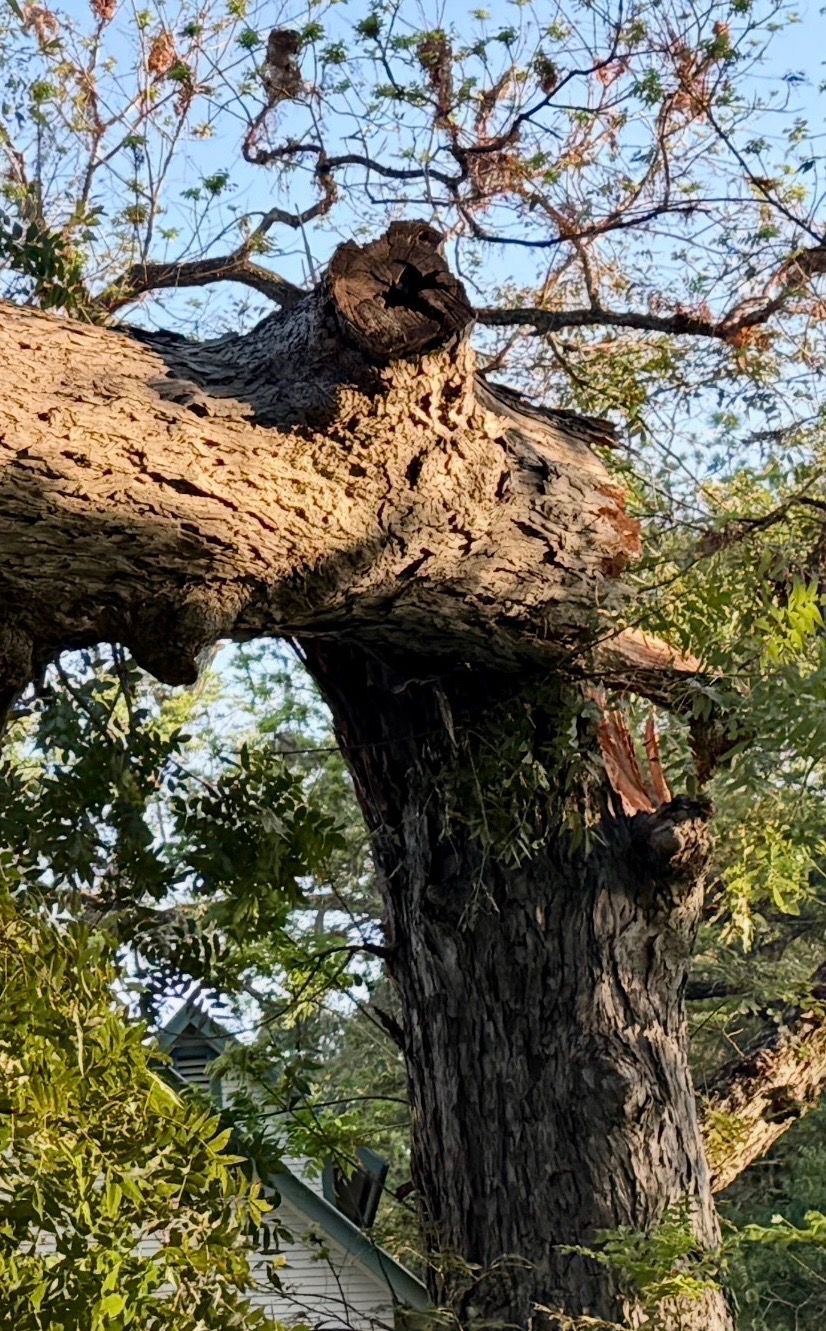
Look closely at the dark, hollowed-out center of this snapped branch. This tree looked completely healthy from the outside until the wind exploited its structural rot.
One of the most common questions we get after a storm is, "The tree was completely green and full of leaves—why did it snap?"
The answer is often hidden inside the wood. From the ground, a tree with a full canopy can look incredibly healthy. But inside the trunk or major unions, water pooling, old improper pruning cuts, or fungal infections can slowly rot the heartwood over years.
When heavy winds hit, a tree with internal decay loses its ability to flex. The healthy sapwood on the outside simply cannot bear the torque, resulting in violent, sudden snapping. Having professional arborists inspect your large trees annually can help identify these hidden cavities before they become a liability.
Fence Line Casualties & Precision Cleanups
Heavy limbs overhanging property lines are prime targets during wind events. On Friday, we responded to numerous calls where massive branches had failed, coming down directly on top of residential fences.
In these situations, the goal is rapid extraction without causing further structural damage to the fence panels or posts. Below is an example of a heavy tree on fence situation we successfully cleared this weekend. By carefully sectioning the downed limbs and hauling away the debris, we were able to clear the boundary line safely and completely.
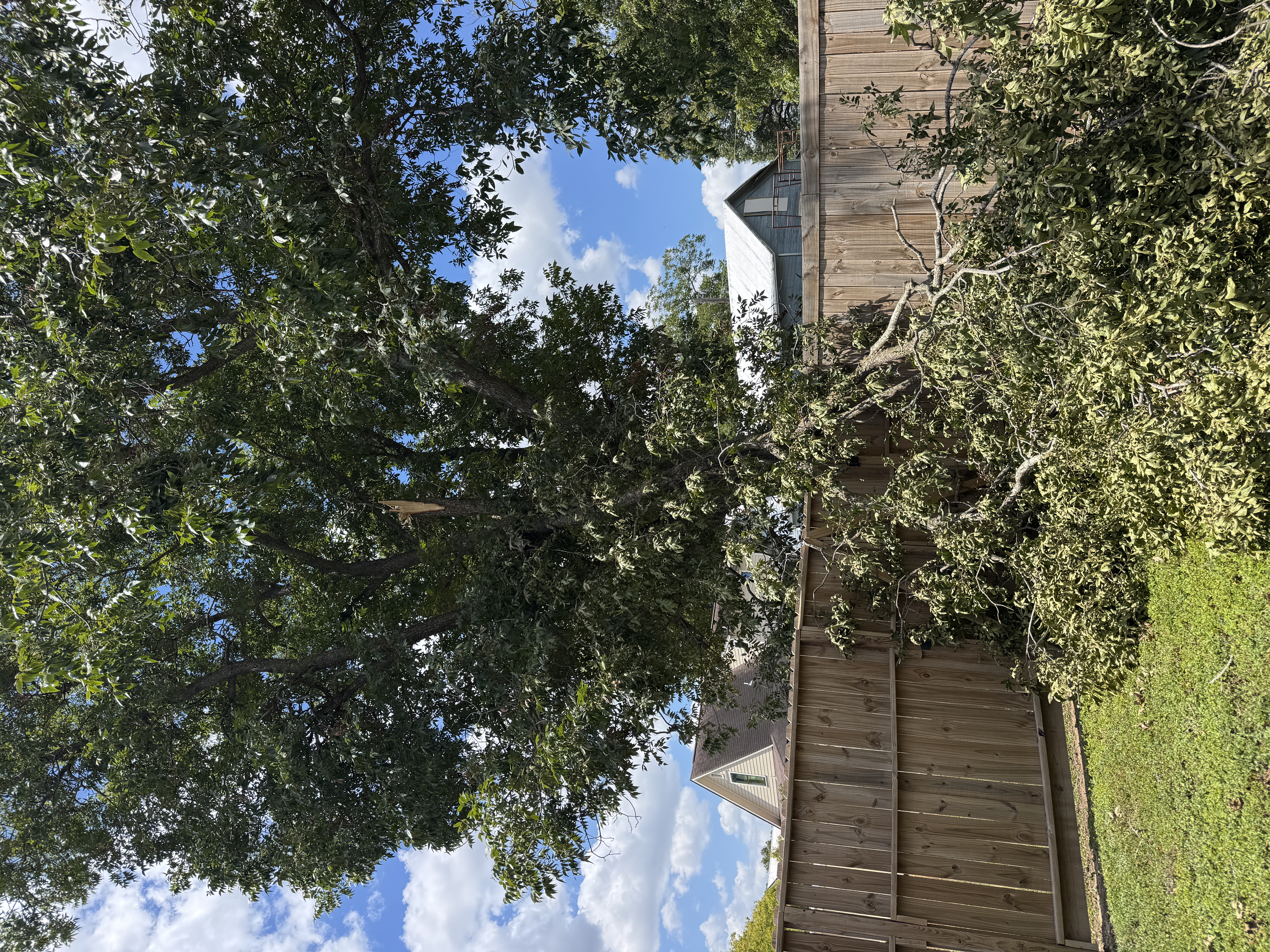 Before
Heavy winds snapped this large limb directly onto the fence line.
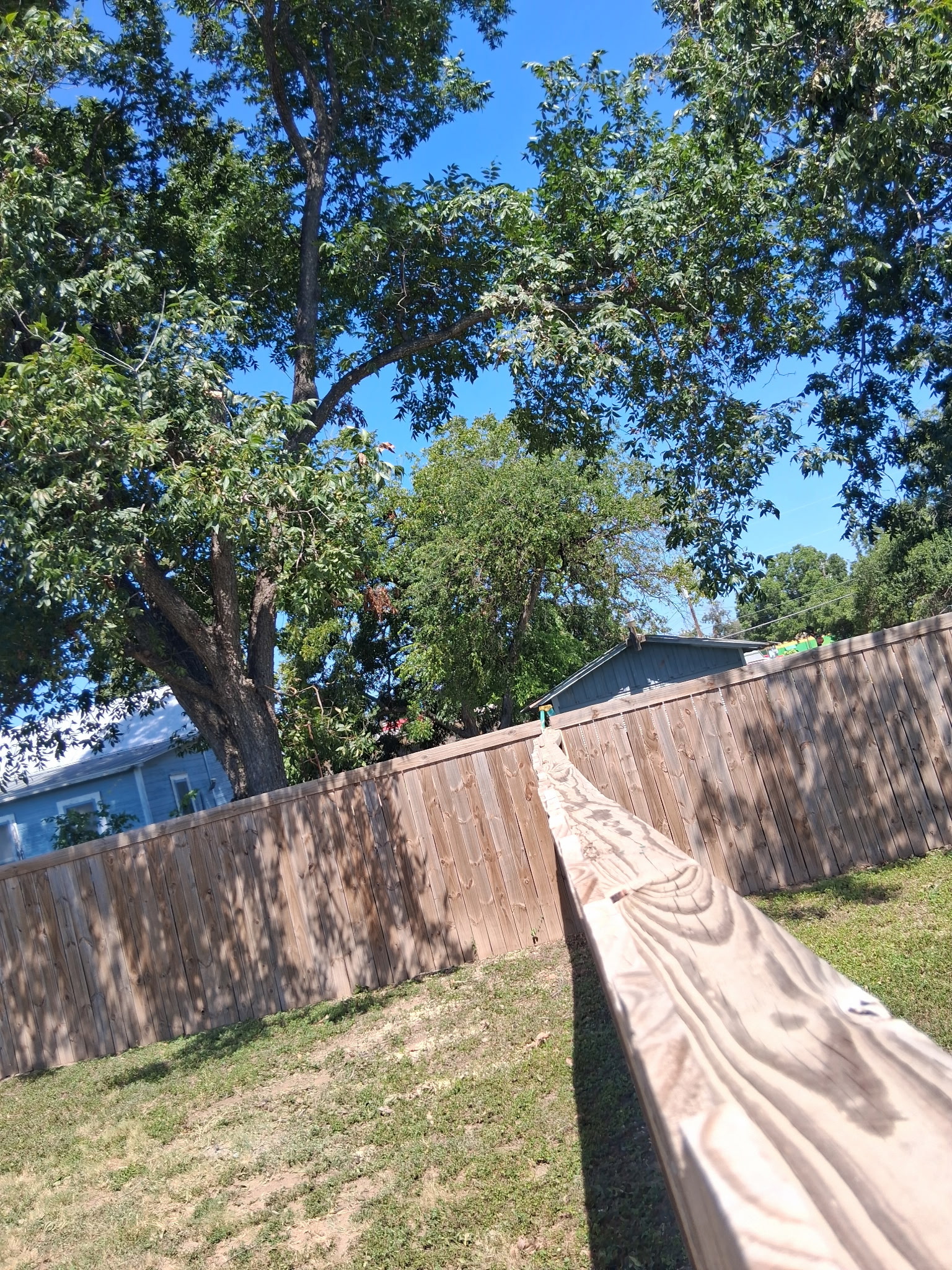 After
After
Our crew safely sectioned and removed the tree, leaving the property spotless.
The Ultimate Hazard: Roof Impacts
While our crews were busy clearing fence lines and driveways, we also surveyed severe structural impacts across the community. When a massive tree fails over a house, the damage is catastrophic. These photos from around town serve as a stark reminder of what happens when preventative maintenance is deferred.
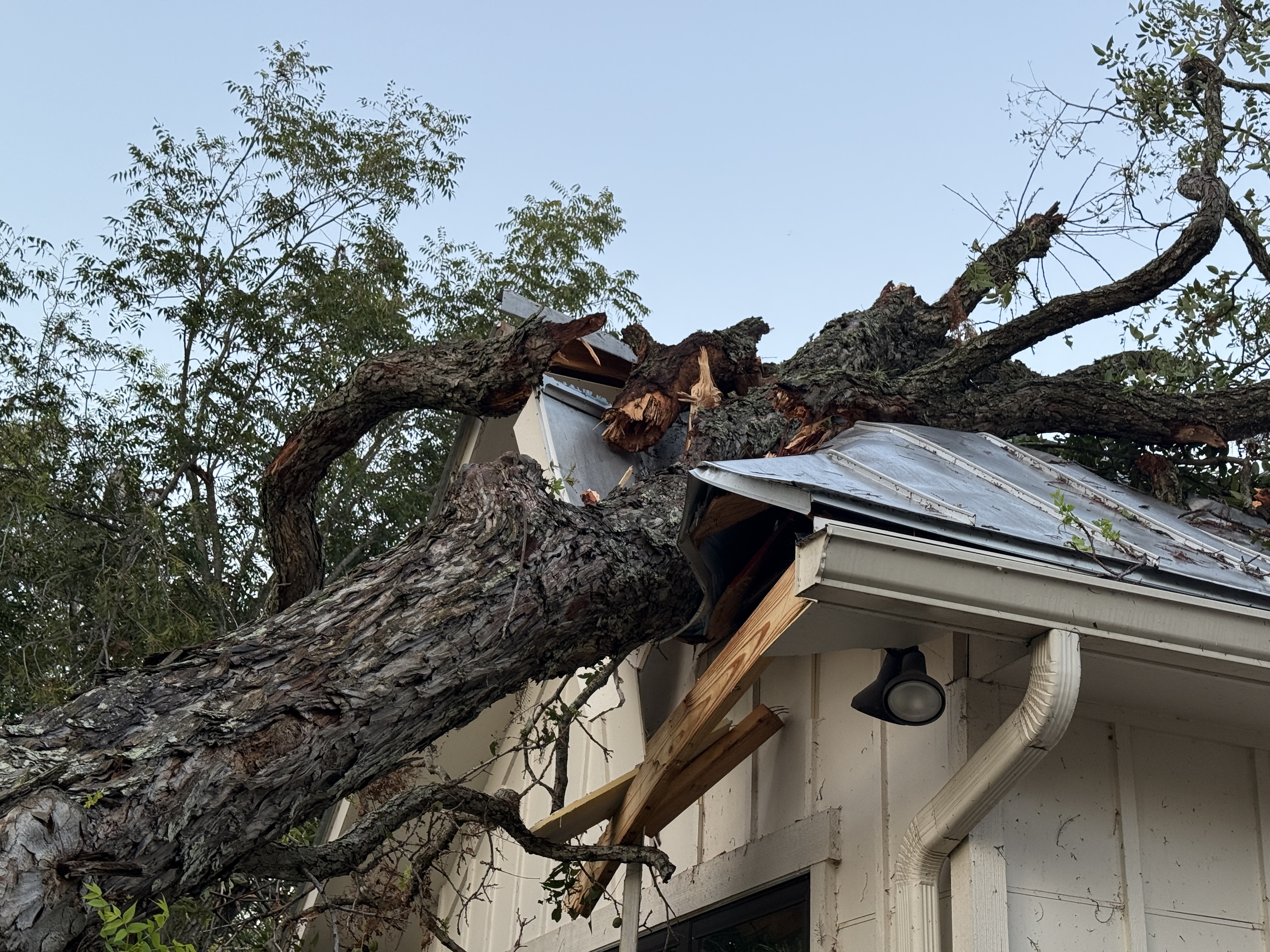
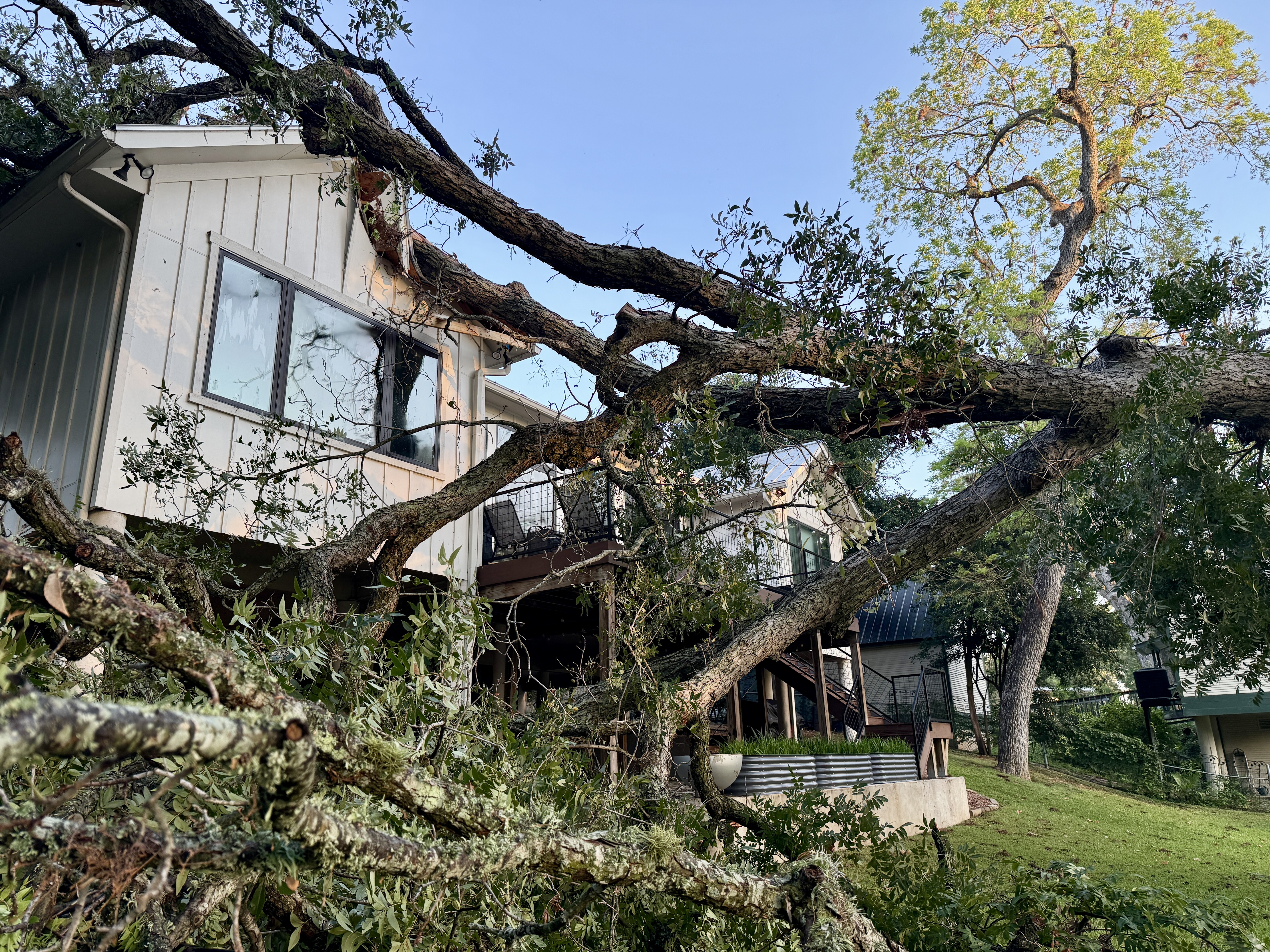
A tree on a roof requires highly technical, crane-assisted or complex rigging removals to lift thousands of pounds of wood off the compromised structure. The best way to avoid this nightmare scenario? Stop it before it starts. Identifying overextended limbs, reducing canopy weight, and performing structural pruning *before* storm season is the most cost-effective insurance policy you can buy for your home.
Prepare Your Canopy for Fall Weather
As we move into September, now is the time to evaluate the large trees towering over your home. Don't wait for the next heavy windstorm to test their strength. Call our emergency tree service in New Braunfels to book a hazard evaluation today.