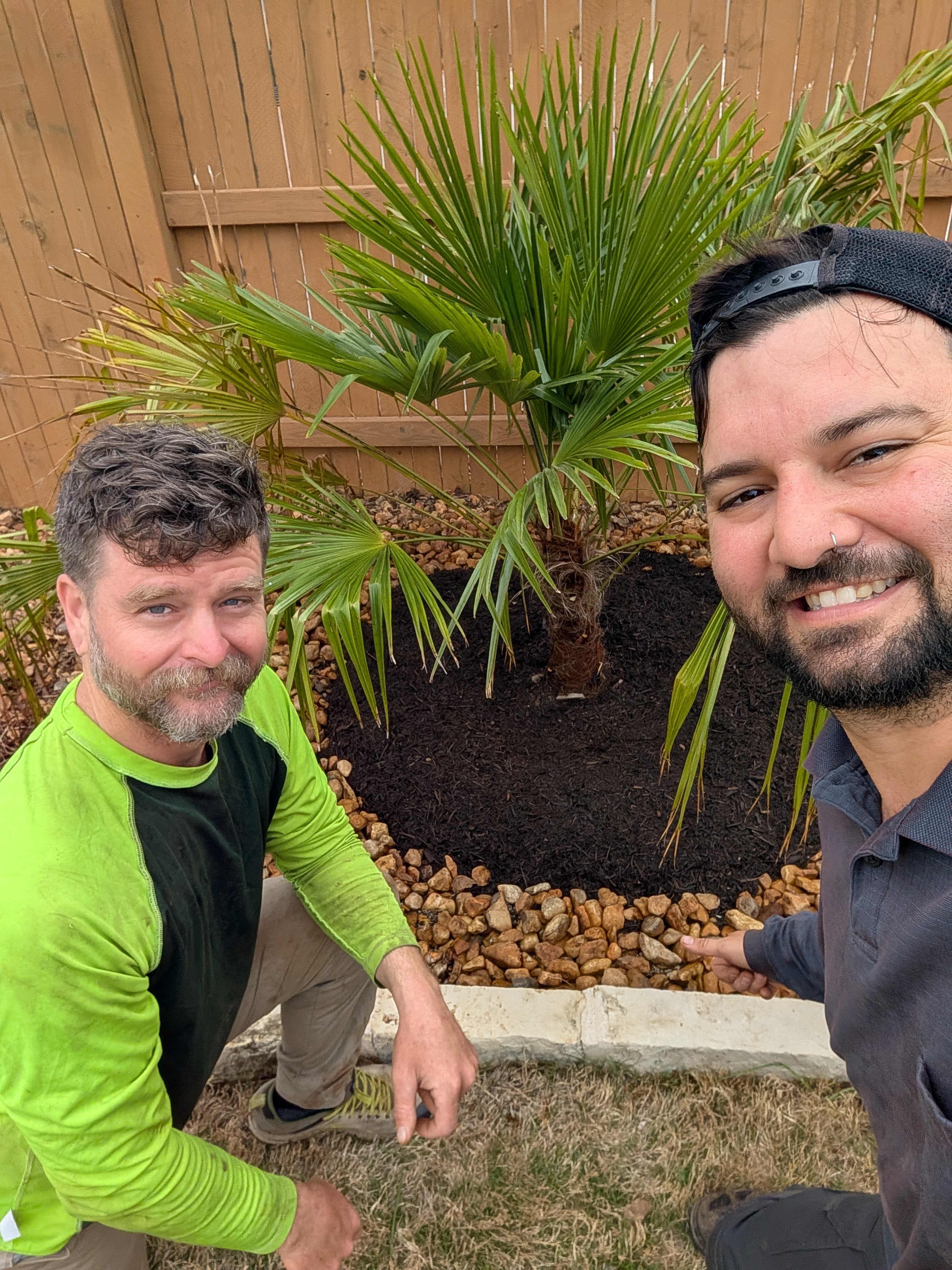
If you live here in New Braunfels or anywhere across the Texas Hill Country, you already know the drill when June rolls around. The skies clear up, the humidity settles in, and our native soils bake under consecutive days of triple-digit heat. It’s a brutal environment for any landscape, and it puts an incredible amount of stress on our backyard trees—often leading to the need for a professional tree service or even an emergency tree removal if they decline too rapidly.
A lot of homeowners think the only answer to a scorching Texas summer is to crank up the automated sprinkler system and watch the water bill skyrocket. But overwatering our rocky, compacted limestone clay can actually suffocate a tree's root system.
The real secret to helping your trees and ornamental plants thrive isn't just about how much water you put down; it’s about how well your soil can hold onto that moisture. And when it comes to building resilient, drought-resistant soil, nothing beats the one-two punch of organic composting and proper mulching.
The Science of Mulch: Your Tree’s Built-In AC Unit
Think of mulch as a protective thermal blanket for your tree's root zone. When bare soil is directly exposed to the intense Comal County sun, ground temperatures can quickly soar past 120°F. At that temperature, fine feeder roots dry out, warp, and die off, crippling the tree's ability to pull up nutrients.
According to extensive urban forestry research, applying a proper layer of organic mulch provides three massive advantages to your property:
- Moisture Retention: A good layer of wood mulch reduces evaporation from the soil surface by up to 50%. That means the water you do apply stays deep in the ground where the roots can actually drink it.
- Temperature Regulation: Mulch insulates the dirt, keeping root zone temperatures significantly cooler during hot summer afternoons, and crucially, warmer when the winter freezes roll through.
- Weed Suppression: Thick mulch blocks out the sunlight that invasive weeds and aggressive lawn grasses need to germinate, keeping them from stealing vital moisture away from your primary trees and garden beds.
Composting: Injecting New Life into Hill Country Clay
While mulch protects the surface, compost completely transforms what's happening underneath.
Much of the soil around New Braunfels, Gruene, and Canyon Lake consists of thin layers of topsoil sitting directly on top of dense, rocky caliche clay. This type of soil compacts easily under heavy foot traffic or lawn mowers, starving roots of vital oxygen.
Integrating high-quality, fully decomposed organic compost into your tree basins completely rewrites the soil structure. Compost introduces billions of beneficial microbes, mycorrhizal fungi, and essential nutrients like nitrogen, phosphorus, and potassium back into the earth. As these microorganisms burrow through the clay, they break up compaction, creating microscopic channels that allow air, water, and root tips to move freely.
By composting, you're essentially turning a dense, dry brick of clay into a rich, living sponge. This reduces the long-term need for excessive watering and prevents structural canopy dieback that often results in the need for an otherwise avoidable tree removal.
It’s Not Just a Summer Thing: Year-Round Root Protection
One of the biggest mistakes our professional arborists see across Central Texas is homeowners only thinking about mulch when they do their spring landscaping. But a solid soil strategy is just as vital during our erratic winter months.
Remember the historic winter freezes we’ve faced over the last few years? Trees that don't have adequate root insulation are highly susceptible to "frost heaving" and root cell death. In the winter, that same 3-inch layer of mulch acts like an outdoor coat, locking in the earth's natural ambient heat and shielding the delicate subterranean trunk flare from sudden, extreme drops in temperature.
Furthermore, as the organic mulch and compost naturally decompose over the winter, they continuously feed the soil, preparing the tree to launch a vibrant, healthy flush of green growth the moment spring arrives, meaning less intensive tree trimming required down the line.
The TLC Guide to Proper Application (Avoid the "Mulch Volcano!")
As professional arborists, Kyle and I see a lot of well-meaning homeowners completely smothering their landscaping. There is a right way and a wrong way to lay down these materials:
The Golden Rule: 3 Inches Deep, Pull It Back from the Bark. You want to spread your compost and mulch evenly across the entire root canopy zone (out to the "drip line" of the branches if possible). Aim for a clean depth of 2 to 3 inches.
Most importantly, never pile mulch directly up against the trunk of a tree—a common mistake known as a "mulch volcano." Piling wet wood chips against live bark traps dark moisture, suffocates the tree’s base, and creates an absolute paradise for boring beetles, fungus, and wood rot. Always leave a clean 2-to-4-inch gap of bare air right around the root flare where the trunk meets the dirt.
Let Us Optimize Your Property’s Soil Health
Every property in the Hill Country has its own unique soil profile, slope, and sun exposure. Whether you're trying to nurse a struggling, historic native Pecan back to health, or looking to protect a newly installed landscape installation, our crew has the tools and expertise to build a custom plant health care solution from the ground up.
At Timber Love & Care, our professional tree service handles precision tree trimming, safe tree removal, and proactive soil management across Comal and Guadalupe Counties. Give us a shout today, and let's make sure your trees are fully prepared to tackle whatever weather Texas throws at us next!
Ready to Boost Your Tree & Soil Health?
From deep-root feeding and professional mulching to expert risk assessments in New Braunfels, Adam, Kyle, and the crew are ready to help your land thrive.
Get A Free Estimate: (830) 500-5585