It is the peak of a grueling Texas summer. You've been meticulously watering that beautiful new oak tree you had installed in your front yard earlier this spring, but seemingly overnight, the leaves have turned crispy and brown. You might assume the extreme July heat is to blame, but the reality is much more systemic.
The fate of that tree was likely sealed the day it was put into the ground. As professional arborists, we are called out to hundreds of failing trees across new Comal County subdivisions every year. Almost every single time, the culprit boils down to two fatal planting errors: Deep Planting and the infamous Bathtub Effect.
Mistake #1: The "Telephone Pole" Deep Plant
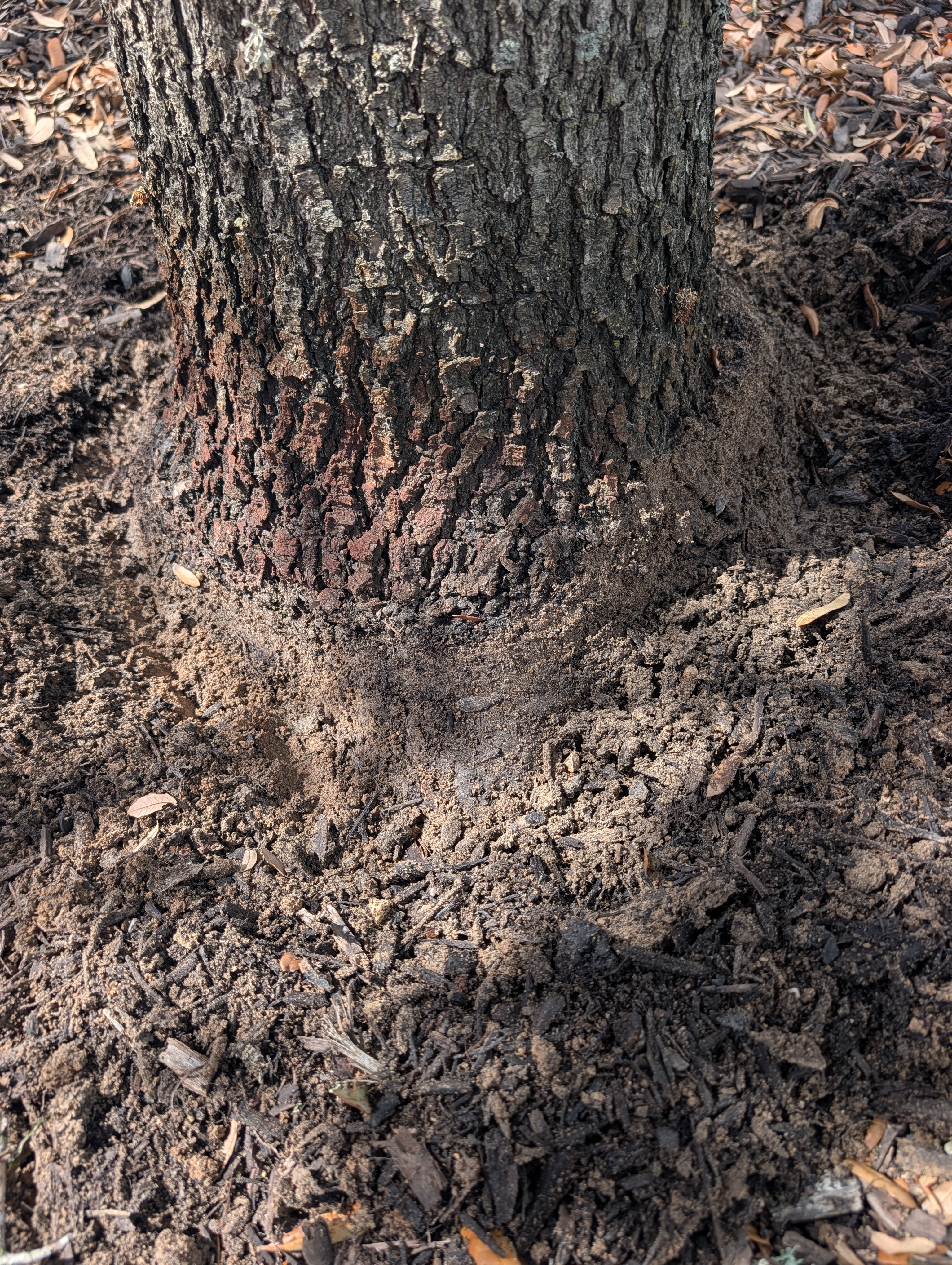
Notice how this trunk goes straight into the soil like a telephone pole? The critical root flare is buried, slowly suffocating the tree.
Trees are not designed to have dirt piled up against their trunks. A healthy tree should flare out at the base where the trunk transitions into the root system (known as the root flare or root collar).
Unfortunately, rushed landscapers frequently dig holes that are too deep or bury the root ball under massive mounds of mulch. When soil and mulch are piled against the bark, it holds constant moisture against tissue that was never meant to stay wet.
Over time, this causes the bark to rot, inviting fungal diseases and pests. Worse, it restricts the vital exchange of oxygen that roots need to survive. A deep-planted tree might survive for a year or two, but it will inevitably struggle, fail to establish a strong canopy, and collapse under the stress of a Texas summer. Proper tree planting in New Braunfels requires setting the root flare slightly *above* the surrounding grade.
Mistake #2: The Texas Clay "Bathtub Effect"
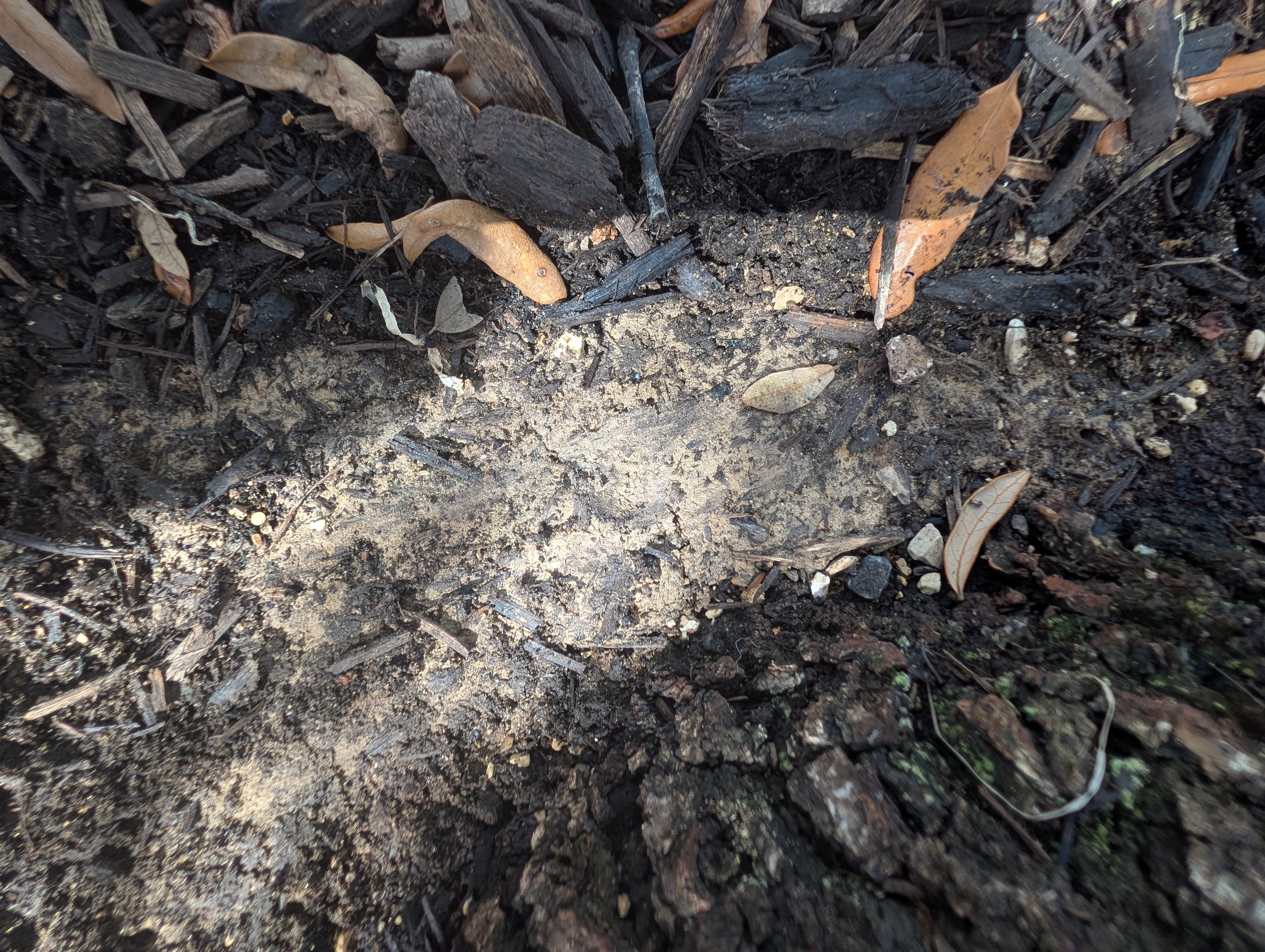
Heavy, compacted Comal County clay acts as a waterproof bowl, trapping moisture and drowning newly planted root systems.
If you live in the Hill Country, you know exactly what our native soil looks like: dense, rocky, impenetrable clay and caliche. While native, established trees have adapted to this over decades, dropping a nursery tree directly into this environment requires specialized soil care.
A common mistake is digging a smooth-sided hole in heavy clay and backfilling it exclusively with light, fluffy potting soil or compost. Because the surrounding clay is so dense and drains so poorly, water from your irrigation system easily flows into the fluffy potting soil but cannot escape the hard clay walls of the hole.
This creates an underground bathtub. Your tree's roots sit submerged in stagnant water, depriving them of oxygen. The roots literally drown and rot away beneath the surface. Without a functioning root system to pull up moisture, the canopy starves—even though the ground is soaking wet!
The Result: Sudden Summer Collapse
Trees suffering from deep planting or the bathtub effect often live in a state of chronic stress. When the brutal heat waves of July and August arrive, a compromised, rotting root system simply cannot uptake enough water to cool the canopy. The result is sudden, catastrophic failure.
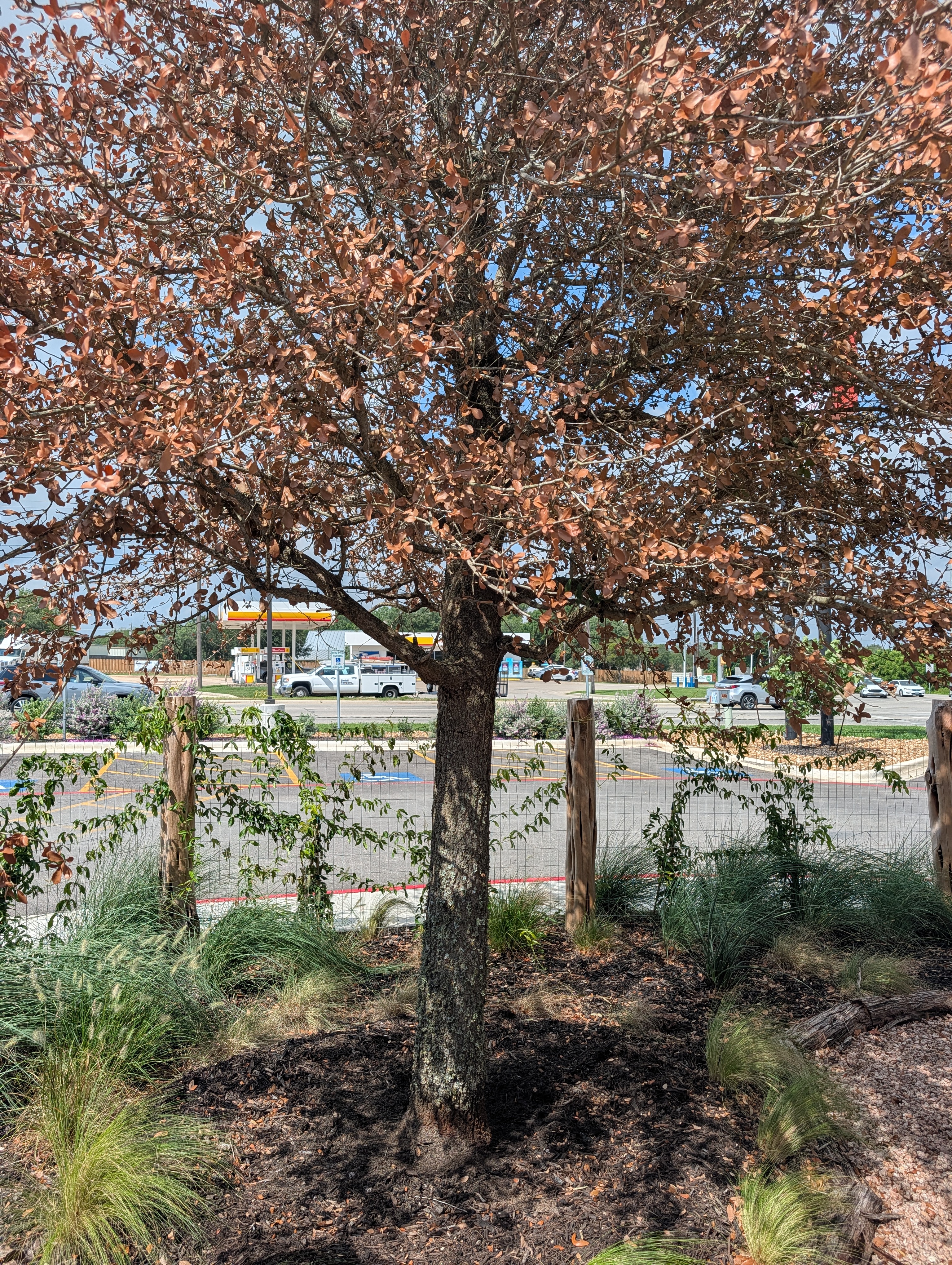
The Final Stage: When a compromised root system meets 100-degree heat, the canopy abruptly flashes brown. Once a tree reaches this stage of vascular failure, recovery is usually impossible.
If your tree has completely flashed brown and the twigs snap instantly when bent, it is likely too late to save. At this point, the safest option is to schedule a professional tree removal in Comal County before the dead wood becomes brittle and poses a structural hazard to your property.
Do It Right The First Time
Don't let improper planting techniques cost you thousands in dead landscaping. Whether you need expert tree installation that respects our native soil, or a hazard assessment on a failing tree, trust a professional tree service to do it right.