Summer in the Texas Hill Country takes a heavy toll on our urban forest. Months of scorching heat, drought, and shallow soil conditions put incredible pressure on hardwood species like Live Oaks, Red Oaks, Ashes, and Pecans. While trees may appear to tolerate the climate initially, heat stress opens the door to a quiet, deadly fungal invader: Hypoxylon Canker.
Unlike diseases that take decades to cause noticeable decline, Hypoxylon moves fast once it establishes a foothold. It rapidly rots the sapwood from the inside out, rendering branches brittle and creating immediate targets for catastrophic structural failure over roofs, vehicles, and driveways.
What is Hypoxylon Canker?
Hypoxylon canker is an opportunistic fungal pathogen. Spores exist naturally in our environment, but healthy, vigorously growing trees can easily suppress the fungus using their natural defense mechanisms.
However, when extreme heat, prolonged drought, construction damage, or severe root compaction weakens a tree's energy reserves, its defenses collapse. The fungus takes hold, spreading through the vascular sapwood and cutting off water transport to the canopy above.
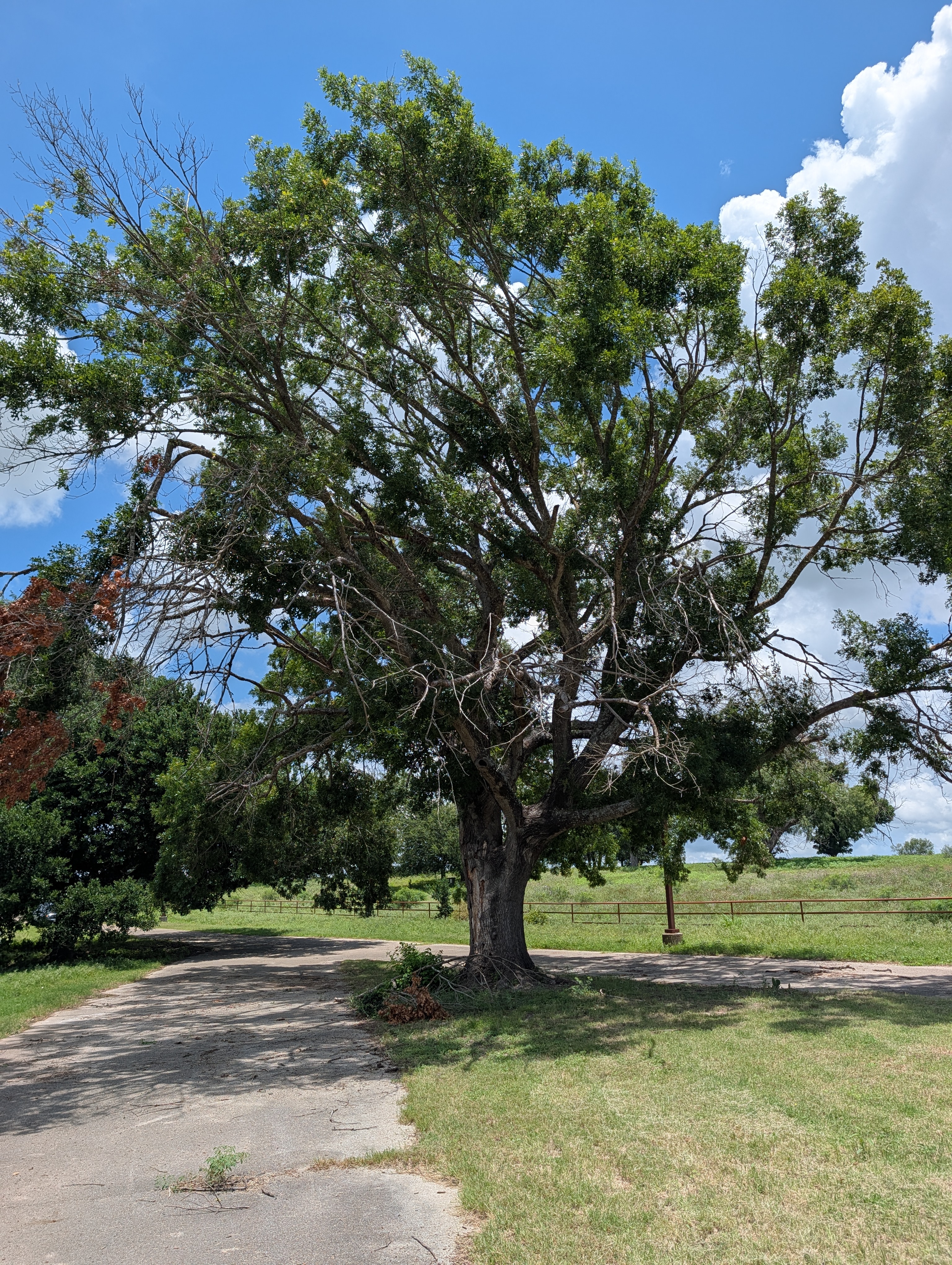
Warning Sign #1 (Thinning Canopy): Top-down branch dieback is often the very first indicator that Hypoxylon fungus has compromised the tree's internal plumbing system.
3 Tell-Tale Signs to Look For in Your Yard Right Now
Inspect the hardwood trees on your property for these three key visual cues:
- 1. Thinning Canopy & Upper Dieback: The earliest symptom is usually a sparse, yellowing canopy starting at the topmost branches. As sapwood rots, water cannot reach upper leaves, causing twigs to die and leaves to drop prematurely in mid-summer.
- 2. Crusty Fungal Mats: As the infection progresses beneath the bark, the fungus pushes through to the surface, creating distinct, flat fungal mats. These appear as tan, olive-green, light gray, or silver-black crusty patches directly on the trunk or major limbs.
- 3. Peeling Bark & Exposed Trunk Wood: The pressure of expanding fungal mats causes outer bark to slough off in large strips. Once bark flakes away, raw, dried wood is left exposed along the main trunk.
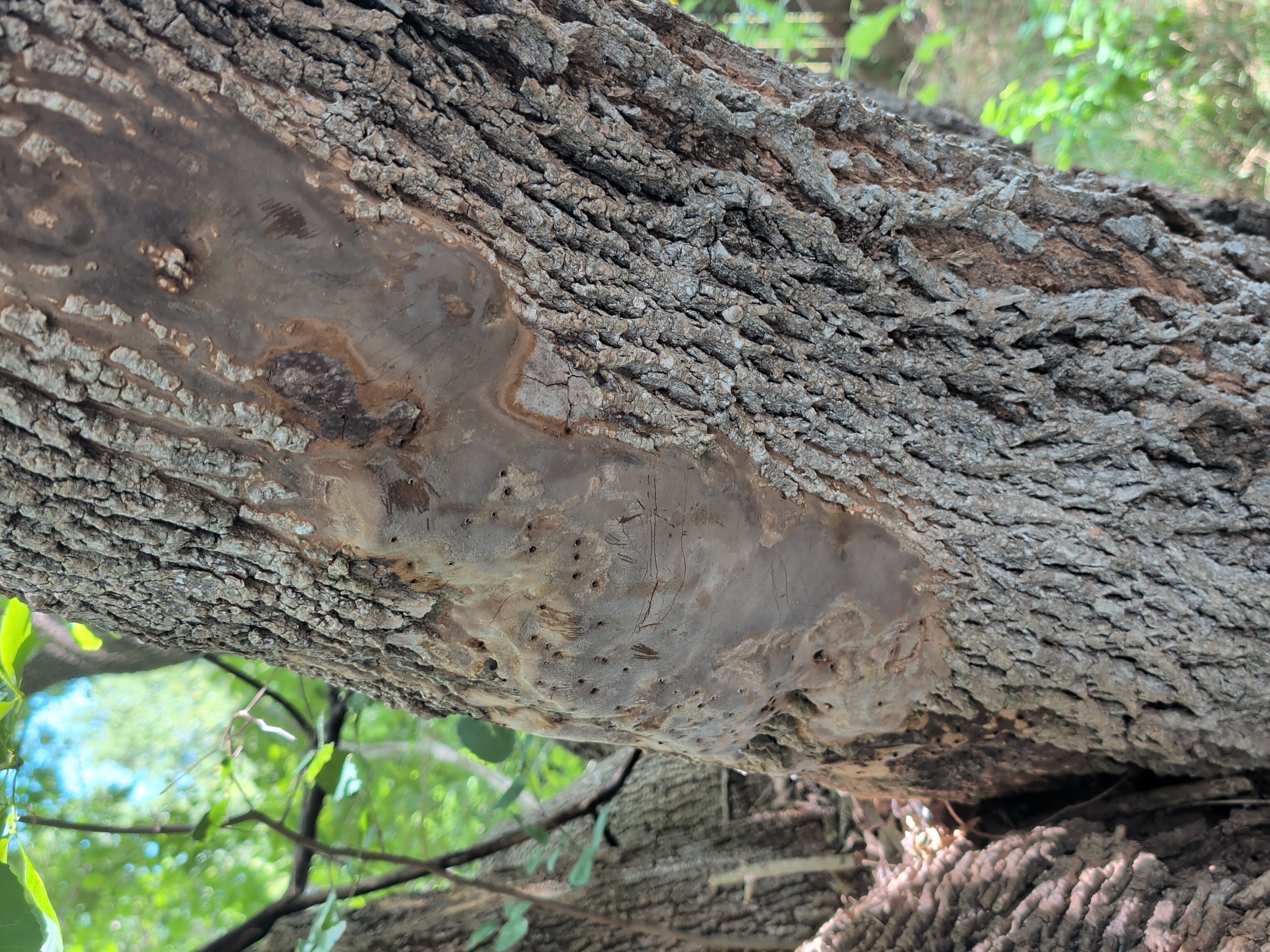
Warning Sign #2 (Fungal Mats): Up-close detail of a tan-gray fungal crust rupturing through bark tissue.
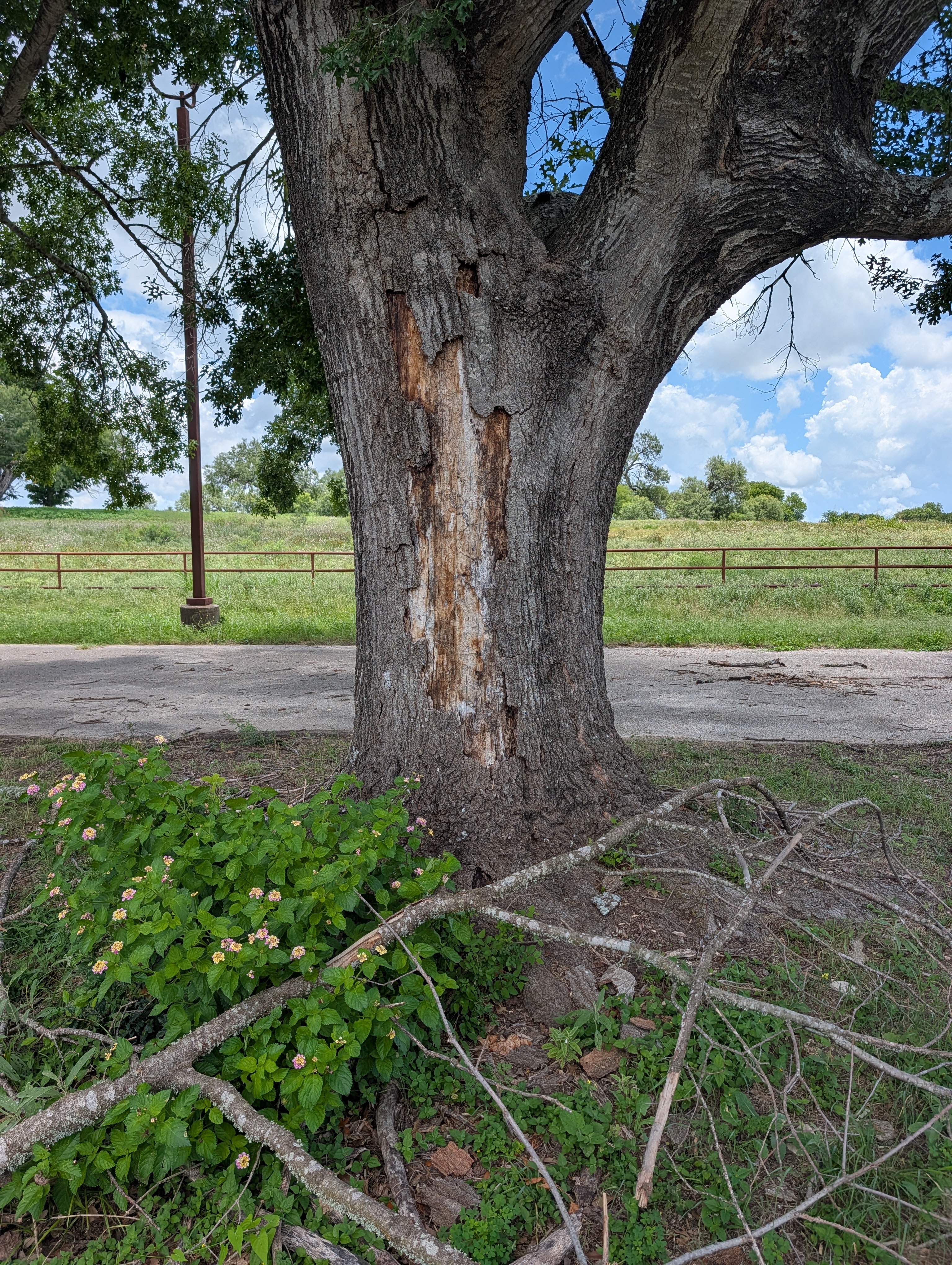
Warning Sign #3 (Peeling Bark): Outer bark flaking away in large strips to expose bare, compromised wood.
Why Infected Trees Become High-Risk Hazards
Unlike heart-rot fungi that decay trees slowly over decades, Hypoxylon rapidly degrades structural sapwood. The wood loses its flexural strength and becomes extremely brittle—similar to dry styrofoam.
Infected limbs can snap without warning under their own weight, even on calm, sunny days. Once a tree exhibits visible fungal mats over a significant portion of its trunk, internal failure is guaranteed.
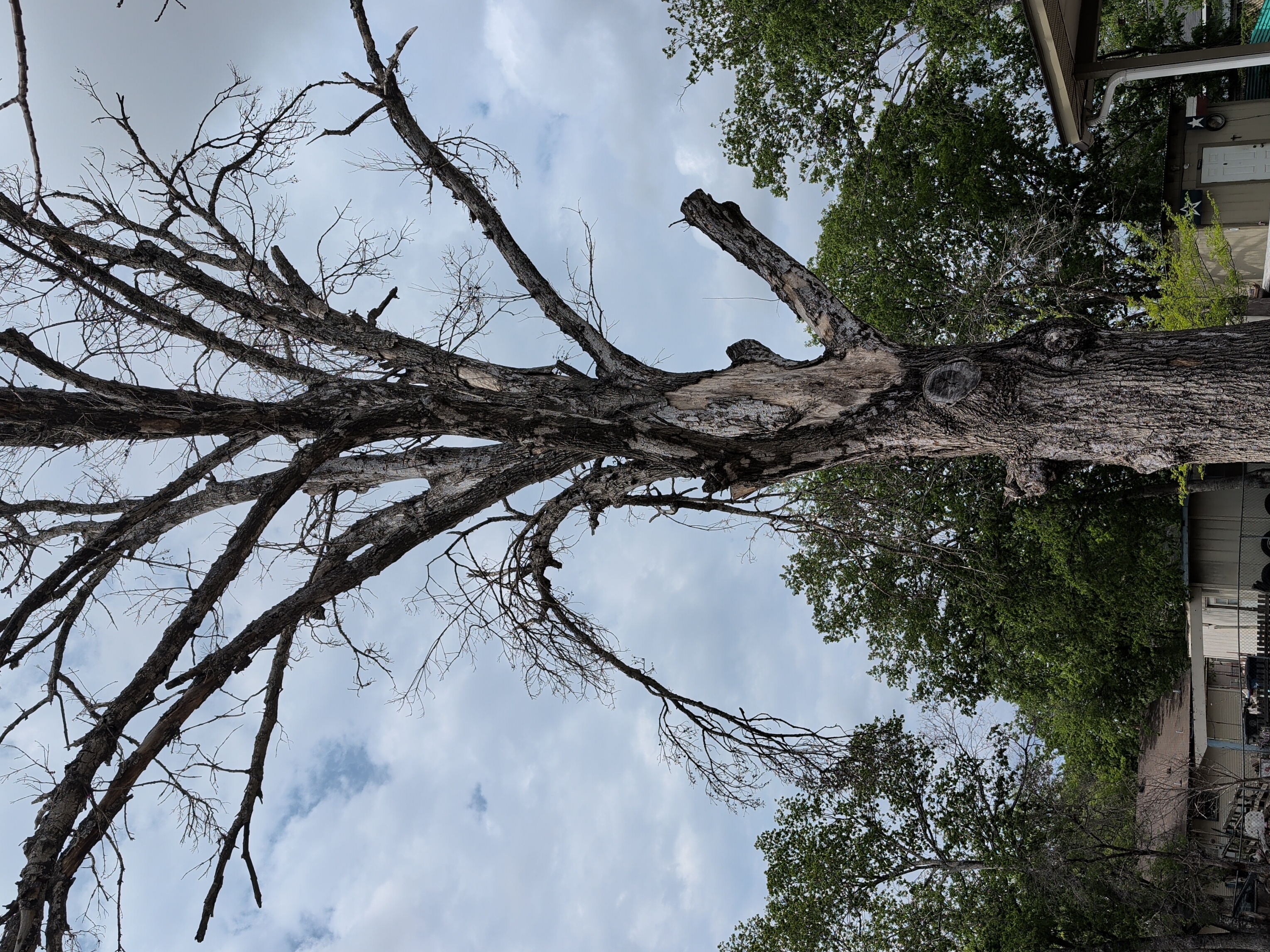
Advanced Decay: A tree completely killed by Hypoxylon. At this stage, climbing or rigging requires specialized arborist techniques to safely perform a hazardous tree removal.
Can an Infected Tree Be Saved?
Unfortunately, there are no chemical sprays or soil injections that can cure a tree once Hypoxylon fungal mats appear on the main trunk.
If the infection is isolated to a single branch, prompt professional tree trimming by experienced arborists can sometimes eliminate the infected limb before it spreads to the main stem. However, if the main trunk exhibits bark peeling and widespread fungal crusts, a safe, controlled tree removal in New Braunfels or Comal County is the only way to eliminate property risks.
The best defense against Hypoxylon is prevention: keeping trees well-watered during summer dry spells, avoiding soil compaction over root zones, and consulting professional arborists at the first sign of canopy stress.
Suspect Hypoxylon on Your Property?
Don't wait for brittle wood to test its strength against your roof. Contact Adam and Kyle at Timber Love & Care today for a comprehensive tree health inspection and free estimate.